This page is part of the Court Officers Act 1926 exhibition.
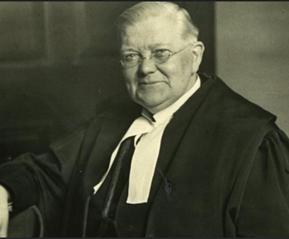
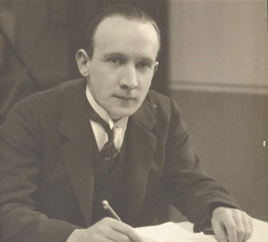
The Government’s initial plans in the Court Officers’ Bill for extensive control by the Minister of staffing appointments and transfers in the higher courts quickly met with criticism from the Opposition, the Judiciary and the legal profession.
Thomas Johnson, Leader of the Opposition, speaking on the Bill in the Dail, felt that the provisions went too far in ceding influence over the courts system to the Government and queried whether the appointment particularly of higher officers of the courts, should be at the discretion of the Government and asked if that function “should not be retained with some modification perhaps, still in the hands of the judiciary….”.
The Minister for Justice, Kevin O’Higgins, responded that “…there has to be a clean break from that whole system of irresponsible patronage, judicial patronage, patronage for the exercise of which there was no responsibility to the people through any Parliament…”.
The proposals were strongly objected to by Chief Justice Kennedy on behalf of the Supreme Court and High Court judiciary in a letter to the Minister of 15th March 1926 containing a lengthy critique of the relevant provisions – and which the Chief Justice shortly afterwards copied to the President of the Executive Council, W.T. Cosgrave.
The Chief Justice made clear that the Judiciary unanimously supported the measures in the Bill to remove judicial patronage over staff appointments but took issue with the proposal to transfer control of court staff from the Judiciary to the Minister, describing it as “…a vast erosion of the Constitution which declares the independence of the Judges in the exercise of their functions…”.
The measures objected to by the Chief Justice included those which would confer power on the Minister to give general direction to senior courts management to decide on the number of court officerships and who was to be appointed to those posts. He expressed the senior Judiciary’s “clear and deliberate opinion” that
“…the Constitution and the public interest require that the control and direction of the officers of the Courts (but not their appointment) shall rest with the Judges and that once appointed these officers shall not have ministerial interference with their work.”
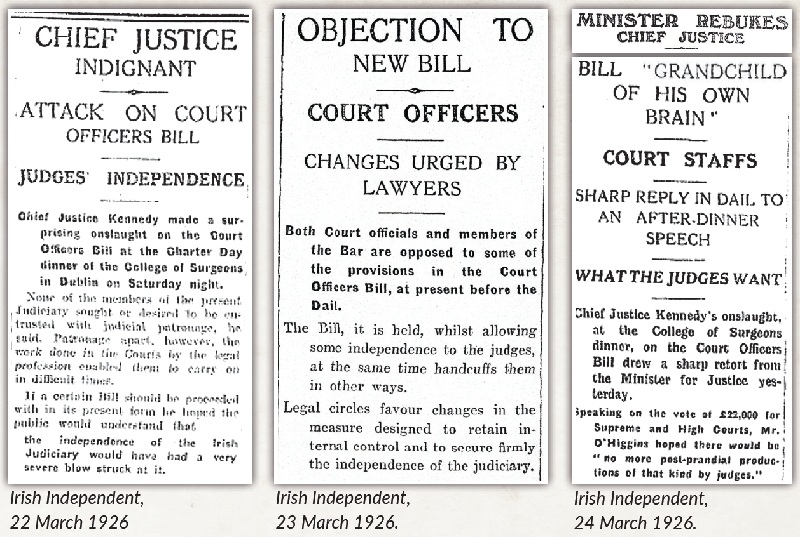
Not having received a substantive reply from the Minister, the Chief Justice on 19th March renewed his criticism in public in a speech at a dinner of the Royal College of Surgeons, stating:
“…If a certain Bill should be proceeded with in its present form the public should understand that the independence of the Irish Judiciary would have had a very severe blow struck at it.”
The speech was covered widely in the Press and received support from within the legal profession, from courts staff and in Press comment.
The Government declined to change course and on the 23rd March, Minister O’Higgins, speaking in the Dáil on the Estimates for his Department responded to the Chief Justice’s objections:
“…It is not a corollary to the independence of the Judiciary that the staffs in the public offices attached to the courts shall be lifted above the plane of Parliamentary criticism, shall be immune from comment or criticism in the Parliament of the people; that there shall be no Ministerial control and no responsibility to the electorate, through their representatives, in respect of that important branch of public administration…”.
However, he signalled that the Government had taken heed of the Chief Justice’s concerns – announcing that he would be bringing forward amendments arising from the representations made by the Judiciary.
The amendments incorporated or restored a role for the senior Judiciary in the staffing and business of their courts, including -
- consultation with the Chief Justice and the President of the High Court before the Minister for Justice and Minister for Finance made decisions as to staffing numbers for the court offices respectively associated with them, and as to interchangeability of staff between those offices
- restoration of the Chief Justice’s authority to nominate and retain solicitors, doctors, visitors, and others in the exercise of jurisdiction over adult wards and minors
- preserving judges’ powers to appoint auctioneers, receivers, liquidators and other experts for individual cases before them
Perhaps the most notable amendment was a new section – entitled Preservation of judicial control of court business, which became section 65 of the Bill as enacted, subsections (1) and (2) of which provided:
- Nothing in this Act shall prejudice or affect the control of any judge or justice over the conduct of the business of his court.
- When an officer attached to any court is engaged on duties relating to business of that court which is for the time being required by law to be transacted by or before or under or pursuant to the order of a judge or judges of that court he shall observe and obey all directions given to him by such judge or judges.
Significantly, the amendments had been provided in advance to Chief Justice Kennedy who, having consulted with judicial colleagues, expressed to the Minister his overall satisfaction with them - in particular that they recognised “the principle of judicial control of judicial business.”


