This page is part of the Court Officers Act 1926 exhibition.
Some prominent figures in Irish history and society emerged from the staff of the courts administration in the pre-Independence period.
Bram Stoker
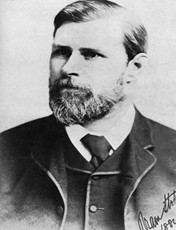
Bram Stoker (1847 –1912), renowned author of the gothic novel “Dracula” (published in 1897), joined the Office of the Registrar of Petty Sessions in 1866, while continuing to pursue studies in Trinity College Dublin - taking an M.A. degree there and studying at the Law School, and then being called to the English Bar.
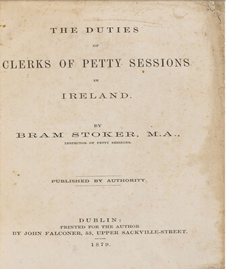
The Office of the Registrar of Petty Sessions, which was located in Dublin Castle, had oversight of the operation of the petty sessions courts nationwide and Stoker worked there for 13 years, for the last two of which he served as the first Inspector of Petty Sessions. Stoker’s manual, “The Duties of Clerks of Petty Sessions” – a standard authority on the subject – was published in Dublin in 1879, the year following his resignation from office.
Stoker resigned to assist the actor-manager, Henry Irving in managing the Lyceum Theatre in London.
“Many of his friends in Dublin thought at the time that it was hardly wise on his part to give up the certainty of a Government position, carrying with it a substantial pension, and to commence life afresh in the hazardous theatrical profession.”
( “Obituary – Mr. Bram Stoker”, Irish Times, 26th April, 1912)
Eoin MacNeill
Eoin MacNeill (1867–1945), a key figure in the foundation of Conradh na Gaeilge in 1893 and the Irish Volunteers in 1913, Eoin MacNeill joined the Accountant-General’s Office in the Supreme Court of Judicature in the Four Courts as a junior clerk in 1887, being the first clerk in the office to be appointed by competitive examination rather than patronage. While serving in the courts, he devoted himself to the study of the Irish language and to his duties as secretary of Conradh na Gaeilge – activity which was not looked on favourably by his superiors in the courts but which did not prevent his being promoted to First Class Clerk in that office in 1897. He left the service of the courts in 1909 to accept an appointment as foundation Professor of Early Irish History in UCD, forgoing his pension entitlements in consequence.
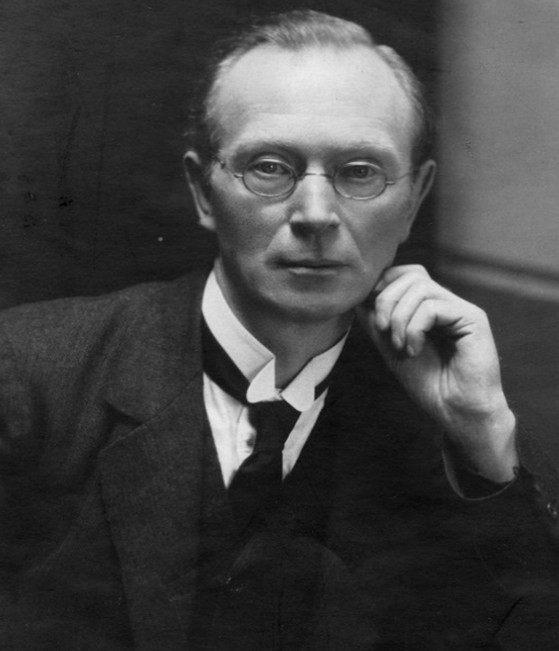
MacNeill was arrested in the aftermath of the Easter Rising and sentenced to life imprisonment, but was released under the general amnesty in 1917 and elected a Sinn Féin MP in the 1918 and 1921 general elections, becoming Ceann Comhairle of the second Dáil and presiding over the debates on the Treaty. He was Minister for Education in the Irish Free State Government from 1922 to 1925 and a nominee of that Government to the Boundary Commission. Failing to secure re-election in 1927, he returned to academic life, but continued to be active in the public sphere, including chairing the Irish Manuscripts. He retired from U.C.D. in 1941.
“I entered the Accountant General’s Office in 1887… The Accountant-General, the Chief Clerk, the senior clerks, and all the junior clerks but myself were appointed before the competition law came into effect... ”
(Extract from a letter from MacNeill to Jeremiah MacVeagh, Irish nationalist M.P.)
Georgina (‘Georgie’) Frost
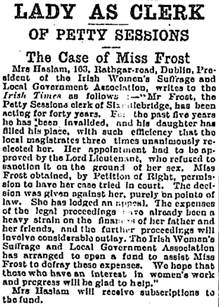
Georgina (‘Georgie’) Frost (1879–1939) was the first and only woman to hold office as a Petty Sessions Clerk – though only after challenging the prohibition on women holding that office in a celebrated case which proceeded as far as the House of Lords. As in most areas of the public service, women were effectively excluded from positions in the courts administration of the pre-Independence era – though not from the Dáil Éireann Courts, which had women judges and clerks - and court officerships after Independence remained largely the preserve of men until the 1940s.
She had acted as Petty Sessions Clerk for the district of Sixmilebridge and Newmarket-on-Fergus for more than five years prior to 1915 while her father, the Petty Sessions Clerk, was ill. On his retirement, the justices at petty sessions appointed her in his place but were informed that the Lord Lieutenant could not approve the appointment of a woman as Petty Sessions Clerk, and were directed to hold a new election. The justices then elected her as temporary Petty Sessions Clerk for a period of twelve months, to allow time for a court to decide whether she could hold the office.
Frost brought proceedings challenging the Lord Lieutenant’s refusal to approve her appointment, but lost in the High Court and in the Court of Appeal. Frost then appealed to the House of Lords.
By then the Sex Disqualification (Removal) Act 1919 – prohibiting disqualification from public office on grounds of sex or marriage - had become law and the appeal did not proceed. Frost was finally appointed Petty Sessions Clerk, but the abolition of that post and its replacement by the office of District Court Clerk brought her career to a premature end.
“…it is not alleged that any holder of any office corresponding to this office has ever been a woman. … I do not feel at liberty to break such thick ice; if it is to be done it must be by a superior court or by the legislature.”
(Barton J in Frost v The King, 1917)
.jpg?Status=Master&sfvrsn=85841bc3_1?sfvrsn=85841bc3_1)
Gerald Horan, K.C.
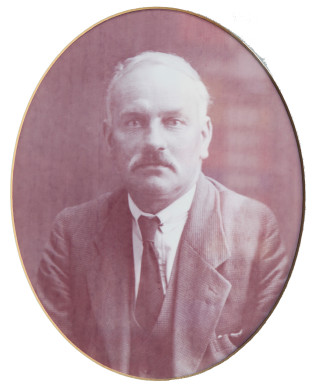
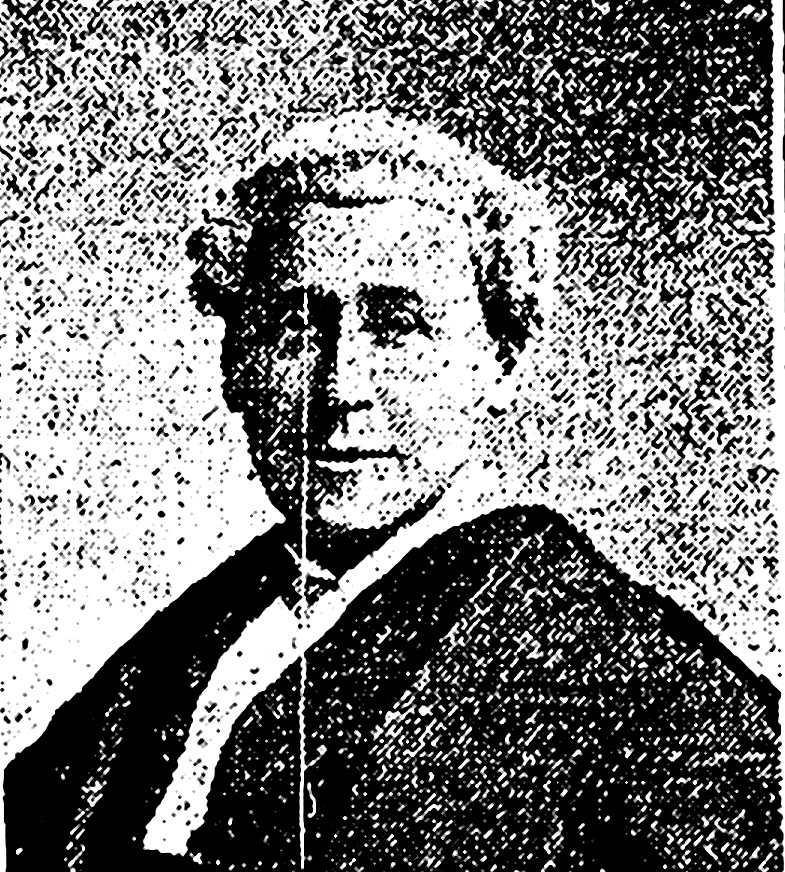
Gerald Horan, K.C. (1880–1949) had been Clerk of the Crown and Hanaper – a post attached to the Chancery Division - and as such was ex-officio Permanent Secretary to the Lord Chancellor of Ireland, including to his uncle, Ignatius O’Brien, Lord Chancellor between 1913 and 1918. Horan had, with A.P. Waterfield and J. Roe of the Treasury, conducted the inquiry into the state of the Supreme Court offices immediately prior to Independence and was the first Master of the High Court to be appointed under the 1926 Act.
Constance P. (“Con”) Curran
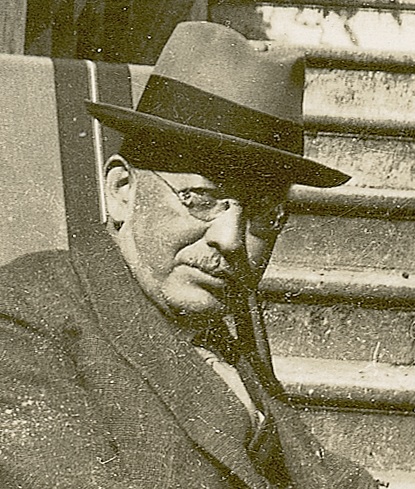
Constance P. (“Con”) Curran (1883-1972) had commenced his career in the courts in 1903 in the Office of the Accountant-General, and served from 1946 to his retirement in 1952 as Registrar of the Supreme Court. As Registrar of the High Court in 1922, he sought - unsuccessfully - to persuade the Anti-Treaty forces to protect the records in the Public Records Building in the besieged Four Courts complex from destruction, and undertook the task of assessing damage to the Four Courts in the aftermath of the siege. He was a lifelong friend and benefactor of James Joyce from their student days in U.C.D, and author of “James Joyce remembered”, was reputedly a model, in part, for the character of Gabriel in James Joyce’s “The Dead”, and is referred to in “Ulysses”.
George Nicholls (Seoirse Mac Niocaill)
George Nicholls (Seoirse Mac Niocaill) (1887-1942) had been Assistant Minister in the Dáil Éireann Department of Home Affairs, having been a leading figure in Galway in the Irish Republican Brotherhood and in the Easter Rising of 1916. He served as a TD in Dail Éireann, becoming Parliamentary Secretary to the Minister for Defence between 1925 and 1927. Not having stood as a candidate in the General Election of June 1927, he served as County Registrar for Galway from 1928 until 1941.